Showing:

Annotations
Asserts
Diagrams
Instances
Model
Properties
Source
Used by
Element sdc4:XdIntervalType / lower
Namespace No namespace
Annotations
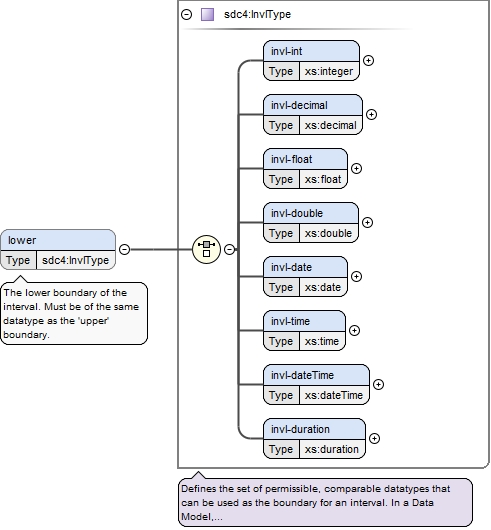
The lower boundary of the interval. Must be of the same datatype as the 'upper' boundary.
Diagram
Diagramsdc4_xsd_Complex_Type_sdc4_InvlType.tmp#InvlType_invl-intsdc4_xsd_Complex_Type_sdc4_InvlType.tmp#InvlType_invl-decimalsdc4_xsd_Complex_Type_sdc4_InvlType.tmp#InvlType_invl-floatsdc4_xsd_Complex_Type_sdc4_InvlType.tmp#InvlType_invl-doublesdc4_xsd_Complex_Type_sdc4_InvlType.tmp#InvlType_invl-datesdc4_xsd_Complex_Type_sdc4_InvlType.tmp#InvlType_invl-timesdc4_xsd_Complex_Type_sdc4_InvlType.tmp#InvlType_invl-dateTimesdc4_xsd_Complex_Type_sdc4_InvlType.tmp#InvlType_invl-durationsdc4_xsd_Complex_Type_sdc4_InvlType.tmp#InvlType
Type sdc4:InvlType
Properties
content complex
minOccurs 0
maxOccurs 1
Model
Children invl-date, invl-dateTime, invl-decimal, invl-double, invl-duration, invl-float, invl-int, invl-time
Instance
<lower>
  <invl-int>{1,1}</invl-int>
  <invl-decimal>{1,1}</invl-decimal>
  <invl-float>{1,1}</invl-float>
  <invl-double>{1,1}</invl-double>
  <invl-date>{1,1}</invl-date>
  <invl-time>{1,1}</invl-time>
  <invl-dateTime>{1,1}</invl-dateTime>
  <invl-duration>{1,1}</invl-duration>
</lower>
Source
<xs:element maxOccurs="1" minOccurs="0" name="lower" type="sdc4:InvlType">
  <xs:annotation>
    <xs:documentation xml:lang="en-us">The lower boundary of the interval. Must be of the same datatype as the 'upper' boundary.</xs:documentation>
  </xs:annotation>
</xs:element>
Element sdc4:XdIntervalType / upper
Namespace No namespace
Annotations
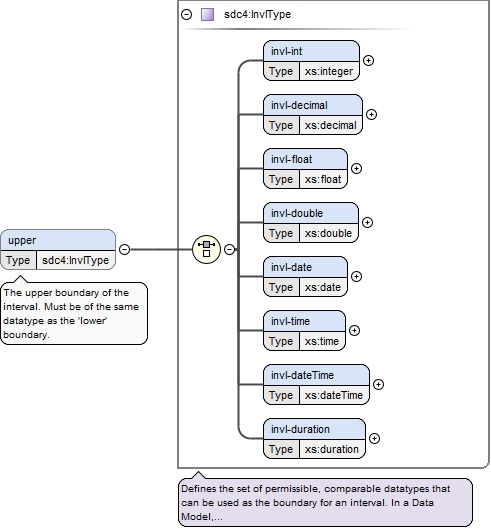
The upper boundary of the interval. Must be of the same datatype as the 'lower' boundary.
Diagram
Diagramsdc4_xsd_Complex_Type_sdc4_InvlType.tmp#InvlType_invl-intsdc4_xsd_Complex_Type_sdc4_InvlType.tmp#InvlType_invl-decimalsdc4_xsd_Complex_Type_sdc4_InvlType.tmp#InvlType_invl-floatsdc4_xsd_Complex_Type_sdc4_InvlType.tmp#InvlType_invl-doublesdc4_xsd_Complex_Type_sdc4_InvlType.tmp#InvlType_invl-datesdc4_xsd_Complex_Type_sdc4_InvlType.tmp#InvlType_invl-timesdc4_xsd_Complex_Type_sdc4_InvlType.tmp#InvlType_invl-dateTimesdc4_xsd_Complex_Type_sdc4_InvlType.tmp#InvlType_invl-durationsdc4_xsd_Complex_Type_sdc4_InvlType.tmp#InvlType
Type sdc4:InvlType
Properties
content complex
minOccurs 0
maxOccurs 1
Model
Children invl-date, invl-dateTime, invl-decimal, invl-double, invl-duration, invl-float, invl-int, invl-time
Instance
<upper>
  <invl-int>{1,1}</invl-int>
  <invl-decimal>{1,1}</invl-decimal>
  <invl-float>{1,1}</invl-float>
  <invl-double>{1,1}</invl-double>
  <invl-date>{1,1}</invl-date>
  <invl-time>{1,1}</invl-time>
  <invl-dateTime>{1,1}</invl-dateTime>
  <invl-duration>{1,1}</invl-duration>
</upper>
Source
<xs:element maxOccurs="1" minOccurs="0" name="upper" type="sdc4:InvlType">
  <xs:annotation>
    <xs:documentation xml:lang="en-us">The upper boundary of the interval. Must be of the same datatype as the 'lower' boundary.</xs:documentation>
  </xs:annotation>
</xs:element>
Element sdc4:XdIntervalType / lower_included
Namespace No namespace
Diagram
Diagram
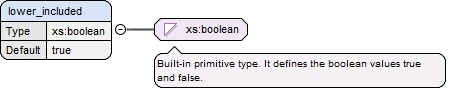
Type xs:boolean
Properties
content simple
minOccurs 1
maxOccurs 1
default true
Source
<xs:element maxOccurs="1" minOccurs="1" name="lower_included" type="xs:boolean" default="true"/>
Element sdc4:XdIntervalType / upper_included
Namespace No namespace
Diagram
Diagram
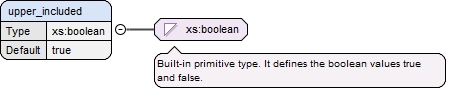
Type xs:boolean
Properties
content simple
minOccurs 1
maxOccurs 1
default true
Source
<xs:element maxOccurs="1" minOccurs="1" name="upper_included" type="xs:boolean" default="true"/>
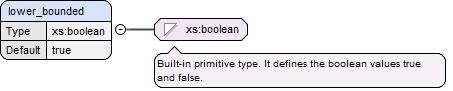
Element sdc4:XdIntervalType / lower_bounded
Namespace No namespace
Diagram
Diagram
Type xs:boolean
Properties
content simple
minOccurs 1
maxOccurs 1
default true
Source
<xs:element maxOccurs="1" minOccurs="1" name="lower_bounded" type="xs:boolean" default="true"/>
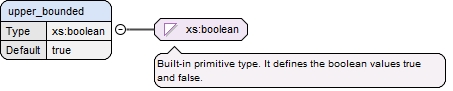
Element sdc4:XdIntervalType / upper_bounded
Namespace No namespace
Diagram
Diagram
Type xs:boolean
Properties
content simple
minOccurs 1
maxOccurs 1
default true
Source
<xs:element maxOccurs="1" minOccurs="1" name="upper_bounded" type="xs:boolean" default="true"/>
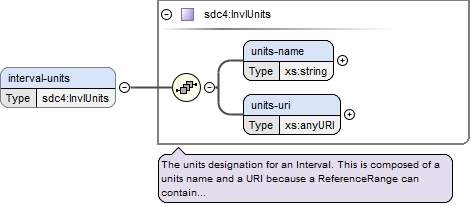
Element sdc4:XdIntervalType / interval-units
Namespace No namespace
Diagram
Diagramsdc4_xsd_Complex_Type_sdc4_InvlUnits.tmp#InvlUnits_units-namesdc4_xsd_Complex_Type_sdc4_InvlUnits.tmp#InvlUnits_units-urisdc4_xsd_Complex_Type_sdc4_InvlUnits.tmp#InvlUnits
Type sdc4:InvlUnits
Properties
content complex
minOccurs 0
maxOccurs 1
Model
Children units-name, units-uri
Instance
<interval-units>
  <units-name>{1,1}</units-name>
  <units-uri>{1,1}</units-uri>
</interval-units>
Source
<xs:element maxOccurs="1" minOccurs="0" name="interval-units" type="sdc4:InvlUnits"/>
Complex Type sdc4:XdIntervalType
Namespace https://semanticdatacharter.com/ns/sdc4/
Annotations
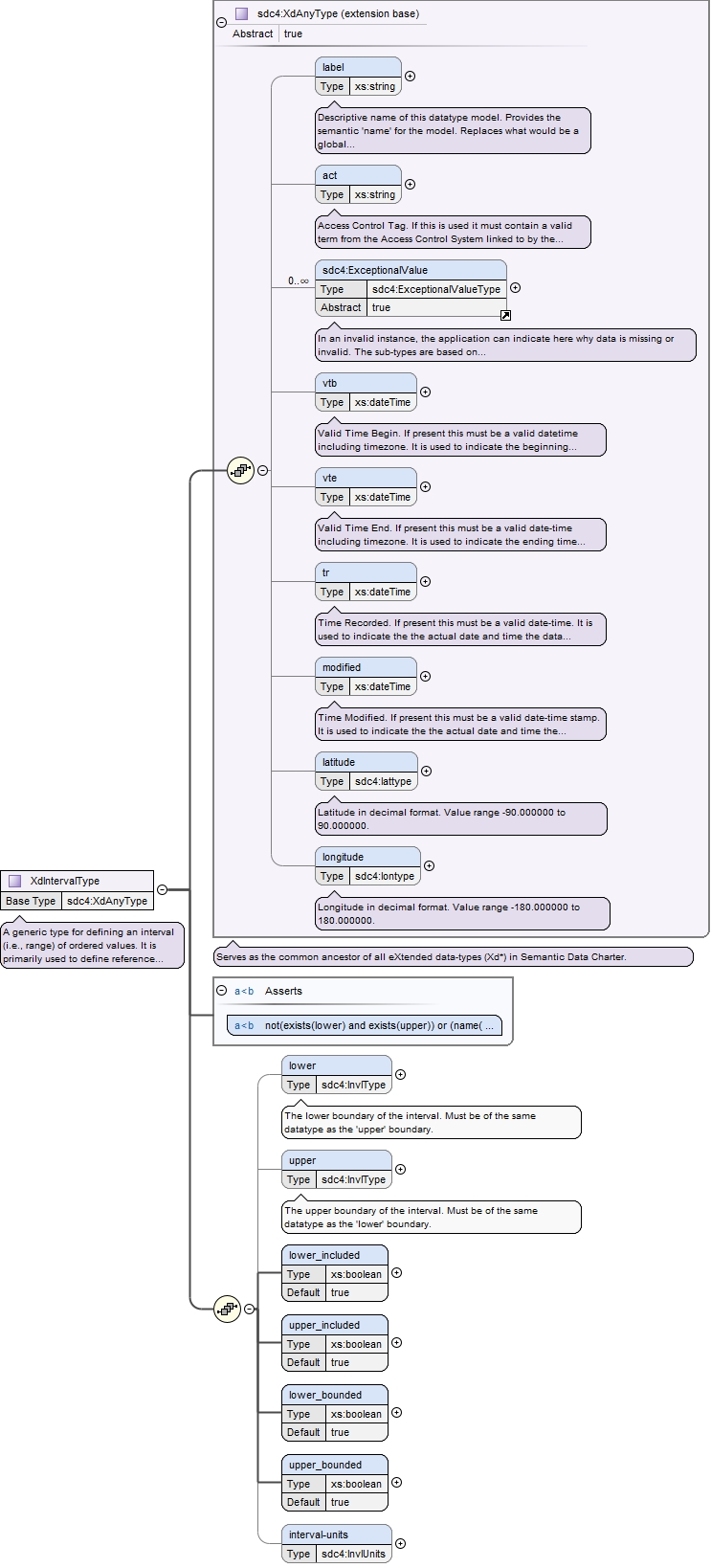
A generic type for defining an interval (i.e., range) of ordered values. It is primarily used to define reference ranges for quantified data.
Diagram
Diagramsdc4_xsd_Complex_Type_sdc4_XdAnyType.tmp#XdAnyType_labelsdc4_xsd_Complex_Type_sdc4_XdAnyType.tmp#XdAnyType_actsdc4_xsd_Element_sdc4_ExceptionalValue.tmp#ExceptionalValuesdc4_xsd_Complex_Type_sdc4_XdAnyType.tmp#XdAnyType_vtbsdc4_xsd_Complex_Type_sdc4_XdAnyType.tmp#XdAnyType_vtesdc4_xsd_Complex_Type_sdc4_XdAnyType.tmp#XdAnyType_trsdc4_xsd_Complex_Type_sdc4_XdAnyType.tmp#XdAnyType_modifiedsdc4_xsd_Complex_Type_sdc4_XdAnyType.tmp#XdAnyType_latitudesdc4_xsd_Complex_Type_sdc4_XdAnyType.tmp#XdAnyType_longitudesdc4_xsd_Complex_Type_sdc4_XdAnyType.tmp#XdAnyTypesdc4_xsd_Complex_Type_sdc4_XdIntervalType.tmp#XdIntervalType_lowersdc4_xsd_Complex_Type_sdc4_XdIntervalType.tmp#XdIntervalType_uppersdc4_xsd_Complex_Type_sdc4_XdIntervalType.tmp#XdIntervalType_lower_includedsdc4_xsd_Complex_Type_sdc4_XdIntervalType.tmp#XdIntervalType_upper_includedsdc4_xsd_Complex_Type_sdc4_XdIntervalType.tmp#XdIntervalType_lower_boundedsdc4_xsd_Complex_Type_sdc4_XdIntervalType.tmp#XdIntervalType_upper_boundedsdc4_xsd_Complex_Type_sdc4_XdIntervalType.tmp#XdIntervalType_interval-units
Type extension of sdc4:XdAnyType
Type hierarchy
Used by
Model
Children act, interval-units, label, latitude, longitude, lower, lower_bounded, lower_included, modified, sdc4:ExceptionalValue, tr, upper, upper_bounded, upper_included, vtb, vte
Asserts
Test XPath default namespace Annotation
not(exists(lower) and exists(upper)) or (name(lower/*) eq name(upper/*))
Source
<xs:complexType name="XdIntervalType">
  <xs:annotation>
    <xs:documentation xml:lang="en-us">A generic type for defining an interval (i.e., range) of ordered values. It is primarily used to define reference ranges for quantified data.</xs:documentation>
    <xs:appinfo>
      <rdf:Description rdf:about="https://semanticdatacharter.com/ns/sdc4/sdc4.xsd#XdIntervalType">
        <rdfs:subClassOf rdf:resource="https://semanticdatacharter.com/ns/sdc4/sdc4.xsd#XdAnyType"/>
      </rdf:Description>
    </xs:appinfo>
  </xs:annotation>
  <xs:complexContent>
    <xs:extension base="sdc4:XdAnyType">
      <xs:sequence>
        <!-- The 'lower' and 'upper' bounds now correctly use InvlType -->
        <xs:element maxOccurs="1" minOccurs="0" name="lower" type="sdc4:InvlType">
          <xs:annotation>
            <xs:documentation xml:lang="en-us">The lower boundary of the interval. Must be of the same datatype as the 'upper' boundary.</xs:documentation>
          </xs:annotation>
        </xs:element>
        <xs:element maxOccurs="1" minOccurs="0" name="upper" type="sdc4:InvlType">
          <xs:annotation>
            <xs:documentation xml:lang="en-us">The upper boundary of the interval. Must be of the same datatype as the 'lower' boundary.</xs:documentation>
          </xs:annotation>
        </xs:element>
        <xs:element maxOccurs="1" minOccurs="1" name="lower_included" type="xs:boolean" default="true"/>
        <xs:element maxOccurs="1" minOccurs="1" name="upper_included" type="xs:boolean" default="true"/>
        <xs:element maxOccurs="1" minOccurs="1" name="lower_bounded" type="xs:boolean" default="true"/>
        <xs:element maxOccurs="1" minOccurs="1" name="upper_bounded" type="xs:boolean" default="true"/>
        <xs:element maxOccurs="1" minOccurs="0" name="interval-units" type="sdc4:InvlUnits"/>
      </xs:sequence>
      <!--
        ================== XSD 1.1 ENHANCEMENT ==================
        This assertion guarantees that the datatypes chosen for the
        lower and upper bounds are identical, preventing invalid intervals
        like having a date for the lower bound and an integer for the upper.
        It checks that the element names inside 'lower' and 'upper' match.
        This assertion correctly handles all cases, including unbounded intervals.
        It only performs the type check if BOTH 'lower' and 'upper' exist.
        If either is missing, the assertion passes.
        ===========================================================
        -->
      <xs:assert test="not(exists(lower) and exists(upper)) or (name(lower/*) eq name(upper/*))"/>
    </xs:extension>
  </xs:complexContent>
</xs:complexType>